
Craft · 4 August 2026 · 4 min read
Why we activate our seeds, the slow way
Wash, soak, dehydrate. It's slow on purpose — and it's the difference between a seed that looks nutritious on paper and one that actually feeds you.
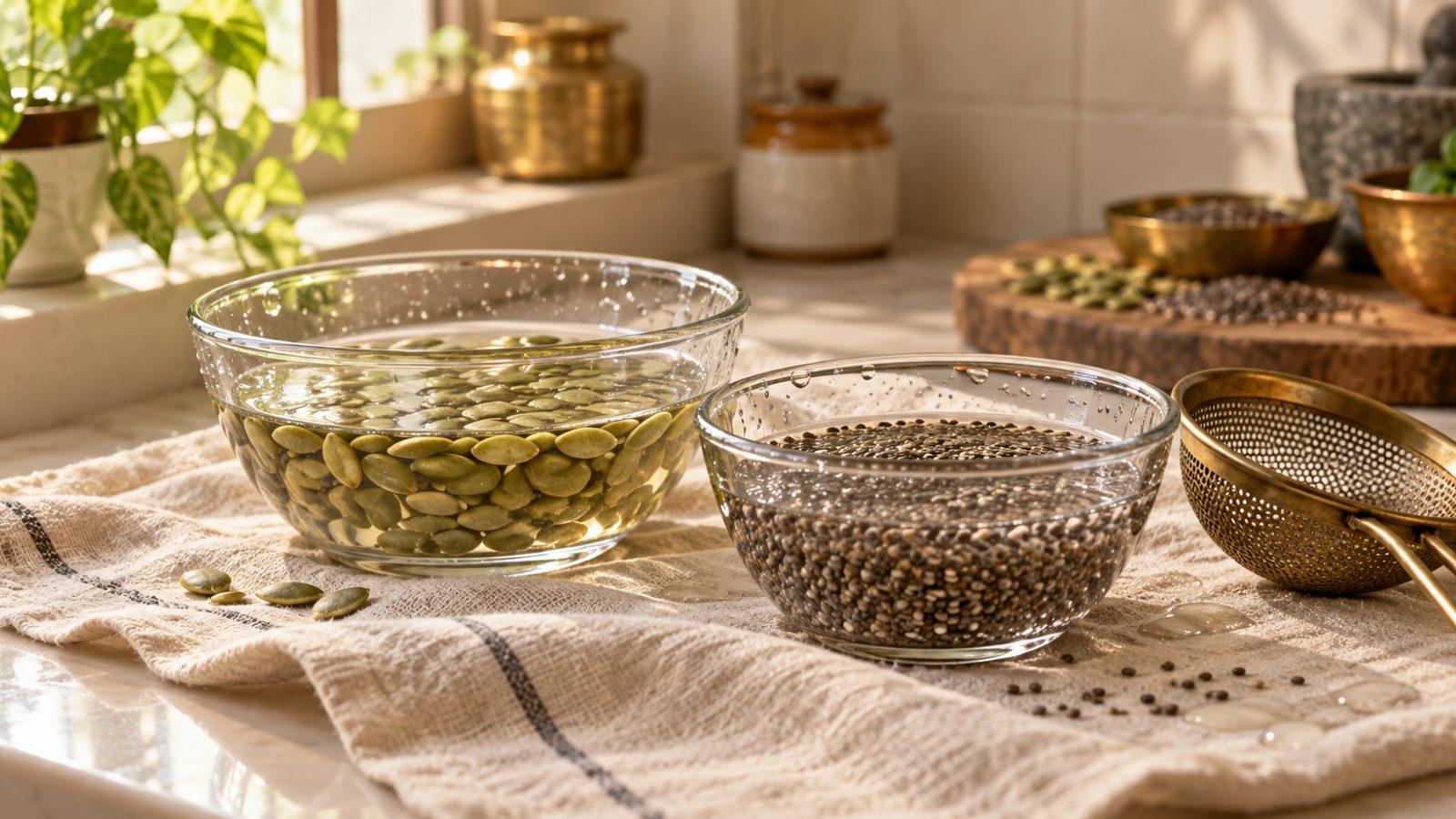
We believe in traditions — the practices passed down through kitchens and generations, long before 'bioavailability' was a buzzword. Soaking seeds before eating them is one of those practices. It's what we do in our own homes. And if it's how we prepare seeds for our families, it's how we prepare them for you.
What activation means
Activation is three steps: wash, soak, dehydrate. It's slow on purpose.
Every seed is built to protect itself until it's ready to sprout. Its main defence is phytic acid — a compound that binds tightly to minerals like zinc, iron, magnesium and calcium, holding them in a form your body can't easily absorb. Left untouched, a seed can look nutrient-dense on paper while giving up very little of that nutrition to you.
What soaking does
Soaking triggers the breakdown of phytic acid. As it breaks down, the minerals it was holding are set free — instead of passing through your system unused, they become available for your body to absorb. Food scientists mapped exactly this process decades ago (Egli et al., 2002, Journal of Food Science).
Then, a gentle drying
The soaked seeds are dehydrated at a low temperature. Low heat protects the delicate fats and enzymes, keeping the seed nutrient-dense. Finally, the seeds are packed into triple-layered pouches to stay fresh.
It's a slower way of doing things. But it's how we'd feed our own — and it's how we feed you.